


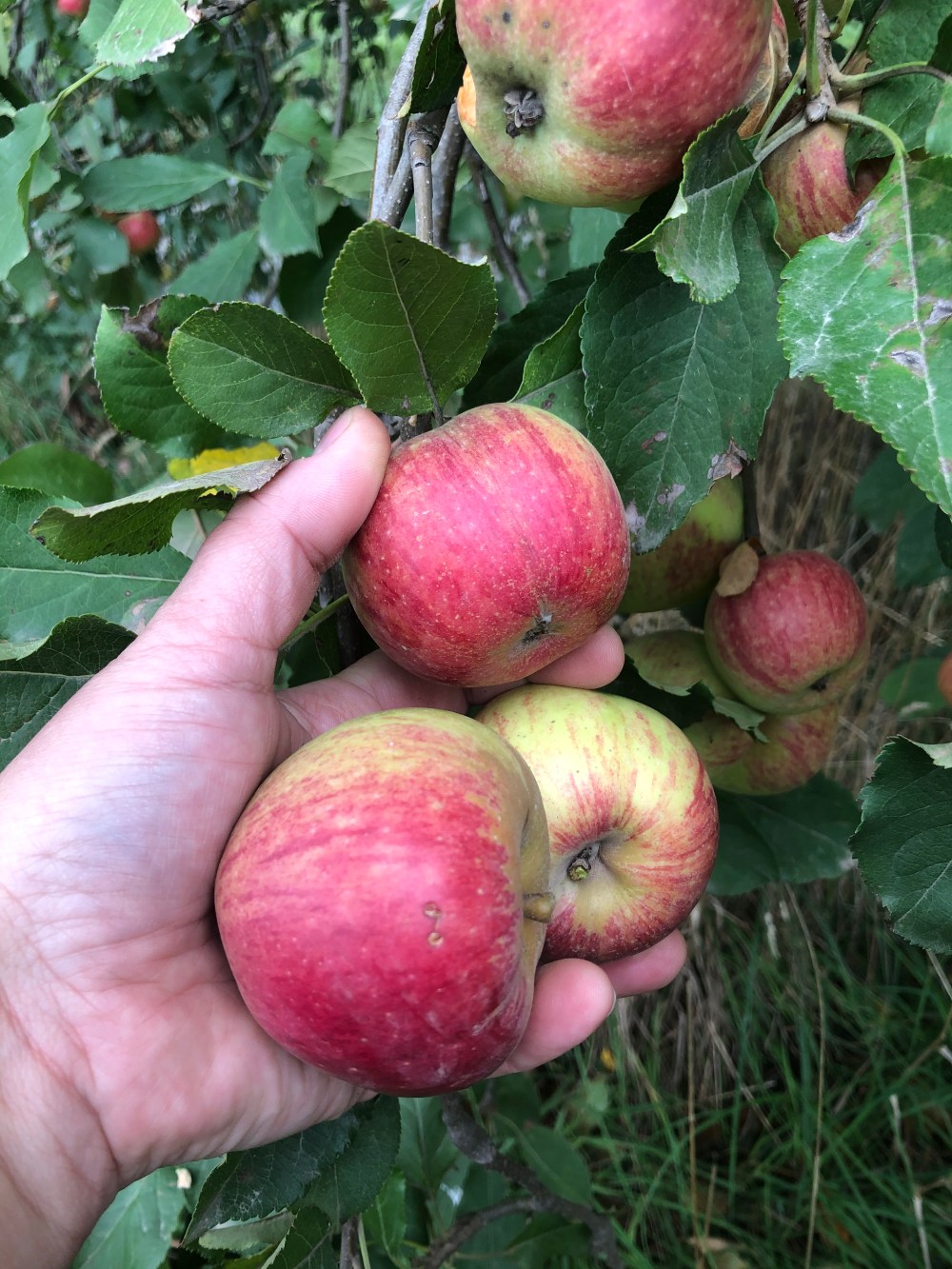
This chutney is in our top 3 favourite preserves, and it’s not just because it tastes amazing: it’s got zero-waste principles at its core. It makes use of unripe tomatoes, so it’s a good one to have on hand at the end of summer when you’re pulling out tomato plants to make room for your winter crops, and you end up with the inevitable fruit that hasn’t yet ripened. This tends to coincide with peak onion season, and roadside feral apples start to appear around the same time, so quite often it’s possible to make this chutney with very little outlay.
Green tomato chutney has a sweet & sour tanginess to it which makes it fresher and zingier than traditional red tomato chutney. Enjoy it with roast meats and vegetables, on a grazing platter, in a burger, in a cheese sandwich, with a fried Big Breakfast, or simply on top of egg and rice.
This can sit on a low simmer for hours, so is perfect for making on the back burner of a wood fired stove on cool autumn days as you keep the house warm. If you’re cooking on bottled gas, be aware that this will need to cook for at least 2 hours on a low heat.



INGREDIENTS:
- 2 kg green tomatoes
- 500g brown onions
- 500g apples
- 2tbsp pickling spice blend*
- 2 cloves garlic, crushed
- 500g sugar white
- 500ml apple cider vinegar
- 1 tbsp salt
* You can buy ready mixed pickling spice, but it’s super easy to make your own. Here’s our recipe.


METHOD:
- Wash & dice tomatoes; peel & chop apples and onions. Add to a heavy bottomed pot.
- Tie pickling spice loosely in a square of clean muslin to form a little spice bag. Add to pot.
- Add all other ingredients and stir to mix well.
- Bring to the boil and then set to a simmer. Give it a stir every now and then so it doesn’t burn on the bottom.
- Once almost all of the liquid has reduced/evaporated, and the chutney holds its shape when spooned to the side, take off the heat.
- Remove spice bag and spoon chutney into hot, sterilised jars. Seal while hot.
- Cool, label and store for a month before eating. This is to let the flavours mellow and mature.
Will keep for 1-2 years unopened in a cool dark cupboard. Will last several months in the fridge once opened.


NOTES:
- Foraged apples are perfect for making preserves, as they’re usually a bit tart and firm, so they hold their shape while cooking, and don’t end up making your preserve overly sweet. Plus they’re free!
- Save your apple cores and skins to make a batch of apple scrap vinegar. It’s perfect for use in cleaning, dressings, cooking, and makes a wonderful zero-waste hair conditioner too.
- It’s preferable to use pure salt for preserving, as the additives in regular table salt can affect the taste and appearance of many preserves. Pure salt is salt that has no additives. Lake, sea, kosher, ‘pickling’, rock: they’re all pure.When measuring by volume rather than weight, make sure to use granulated salt though, otherwise the ratios will be off.
- Make sure to wipe the rims of your jars before sealing. We use a clean cloth dipped in the boiling water used to sterilise jar lids. Any chunks left on the rim will prevent your jar from sealing properly, which means it can spoil.
Permaculture Principle 2: Catch & store energy; 6: Produce no waste


